
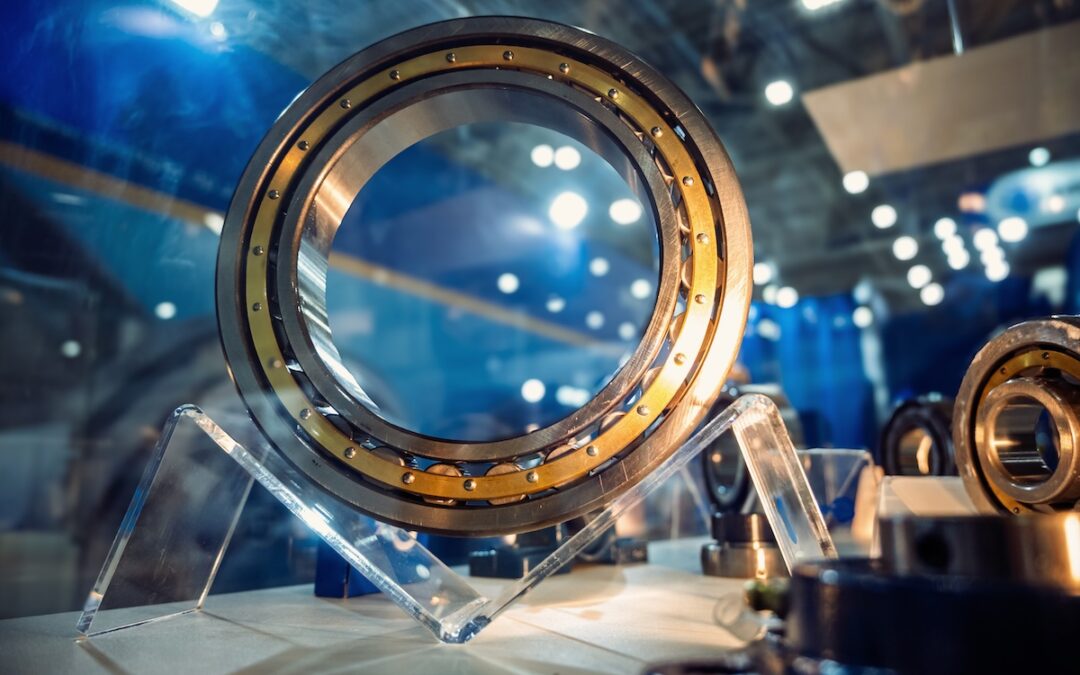
When manufacturers of critical rotational components require complex precision grinding that spans the entire production floor, they turn to partners with proven capability in process optimization and logistical planning. Duval Precision Grinding recently partnered with a Midwest manufacturer of hydrodynamic bearings and seals to manage a demanding, high-touch program that required expertise across multiple grinding operations.
The Challenge: A Comprehensive Precision Grinding Program for Critical Components
Duval Precision Grinding established a relationship with a leading manufacturer in the hydrodynamic bearings and seals industry in 2024. The engagement began with an RFQ for a handful of parts within the same critical part family. Due to the high-precision nature of their product—components essential for demanding rotary applications—the customer provided complete, non-negotiable specifications, relying on Duval’s technical execution to achieve the necessary tolerances.
Why is Precision Grinding Important to Hydrodynamic Bearings?
Hydrodynamic bearings are critical components that rely on a thin, pressurized film of lubricant to prevent metal-to-metal contact during rotation. Any deviation in the component’s geometry (e.g., runout, parallelism, surface finish) can compromise the integrity of this fluid film, leading to premature wear and failure in high-speed or high-load applications. This makes achieving extremely tight tolerances and low surface roughness paramount.
Rotary, ID, and OD Grinding Complex Hydrodynamic Bearing Parts
The complexity of these parts was significant. To meet the stringent customer specifications, the components required a full range of precision operations: Rotary, ID (Internal Diameter), and OD (Outer Diameter) grinding. This multifaceted requirement presented the primary operational challenge: The part required over 52 hours on average to complete, touching three-quarters of the processes within our shop in a specific order.
Managing a job that utilizes nearly every major capability within the facility places immense pressure on workflow and scheduling. This complexity acts as a barrier to entry for less disciplined shops, as the risk of bottlenecks, delays, or minor errors compounding over an extended process is high. For the customer, this job represented high schedule risk and high cost of delay.
Schedule Mastery and Repeatable Process Control
Duval Precision Grinding leveraged our deep cross-industry experience to tackle the demands of this component. The hero of this program was not invention, but well-executed scheduling and production planning. This operational excellence was key to success.
- Crucial Planning and Flow—The Mitigation Strategy: The greatest risks were logistical: managing the long cycle time and the high-value component passing through multiple setups. Scheduling and production planning became the primary risk mitigation strategy. Our team meticulously planned the flow of components and established specific machine slotting windows to ensure the correct, specialized equipment was available precisely when needed, eliminating costly delays.
- Material and Surface Integrity (Standard Controls): Achieving the finish required for hydrodynamic applications demands continuous control over thermal effects on the material and the micro-geometry of the finished surface.
- Material Preparedness: Our standard operating procedures account for the challenges of grinding high-hardness bearing materials. We employ strict process controls to prevent thermal damage, which is a known risk in precision grinding that can compromise component life.
- The Surface Finish Imperative: Requirements for hydrodynamic components typically mandate a surface roughness below 8Ra. For this program, we achieved the required finish through precise parameter adjustments:
- Wheel Selection: Utilizing fine-grain, friable abrasives to ensure a sharp cutting action and minimal heat generation.
- Coolant Delivery: Implementing high-pressure, high-volume coolant delivery systems directly to the grinding zone to effectively manage heat.
The Technical Edge: For the ID and OD grinding operations on these critical bearing surfaces, we adjusted parameters to address both dimensional accuracy and superior finish. This involved precise control over wheel speed, feed rate, and the selection of the correct abrasive material to minimize thermal distortion and achieve the required micro-inch finish.
Outcome: Program Stability and Predictable Throughput
This complex program was successfully navigated by combining our technical grinding expertise with rigorous logistical planning. As confirmed by the successful program completion, risks were mitigated upfront through detailed planning and internal process modifications. The proactive changes to equipment and process effectively “nailed down” the complex requirements, transforming a high-risk logistical challenge into a reliable, repeatable program success. We gained valuable knowledge, confirming that continuous refinement of existing processes yields significant gains in efficiency and quality for multi-step program work.
The initial RFQ via email has now blossomed into a reliable program partnership, demonstrating Duval Precision Grinding’s capacity to handle multi-stage, time-intensive precision grinding projects that are critical to our customers’ success in demanding industries.
Have a High-Risk Program That Can’t Slip?
When your operation depends on multi-step precision and predictable throughput, work with a grinding partner built for disciplined execution.
Frequently Asked Questions (FAQ)
What are the typical challenges when precision grinding components that require multiple operations (ID, OD, and Rotary)?
The primary challenge is maintaining concentricity and parallelism across all three processes. Every time the component is moved and re-fixtured, there is a risk of introducing tolerance stack-up error. Successful execution requires:
-
-
- Establishing a reliable, repeatable datum across all setups.
- Meticulous planning of the process sequence to minimize non-productive setup time and handling.
- Employing highly stable, low-vibration machines to hold previous tolerances during subsequent operations.
-
How does Duval Precision Grinding mitigate the risk of thermal damage (grinding burn) when working with high-precision bearing materials?
Thermal damage is mitigated through a multi-point strategy focused on controlled material removal and heat dissipation:
Wheel Selection: Utilizing abrasives with optimal friability and structure (e.g., ceramic or CBN wheels) to ensure sharp cutting and low friction.
Controlled Parameters: Programming extremely precise wheel speed, feed rates, and depth of cut to keep temperatures below the material’s critical transformation point.
Coolant Delivery: Using high-pressure, high-volume coolant strategically directed to the grinding zone to rapidly extract heat, preventing surface overheating and the formation of detrimental residual stresses.
What level of surface finish can be achieved on bearing surfaces through your ID/OD grinding process?
For critical hydrodynamic and rotational components, we routinely achieve surface finishes below 8Ra (average roughness) and often finer, depending on the material and geometry. The objective is to produce a surface free of grinding marks or residual stress that could interfere with the function of the fluid film or compromise component life.
How do you handle the logistics and scheduling for jobs requiring 50+ hours per component?
For high-volume, high-touch program work, our focus shifts to logistical rigor:
-
-
- Dedicated Production Slotting: Allocating specific machine time across our Rotary, ID, and OD departments to ensure continuous flow and prevent bottlenecks.
- Process Mapping: Creating a detailed map for each part family, identifying all transfer and inspection points, and establishing clear quality gates.
- Risk Mitigation: Using scheduling and production planning as a primary risk mitigation tool, ensuring specialized equipment is ready before the component arrives at the station, drastically reducing overall lead time and eliminating idle time.
-