
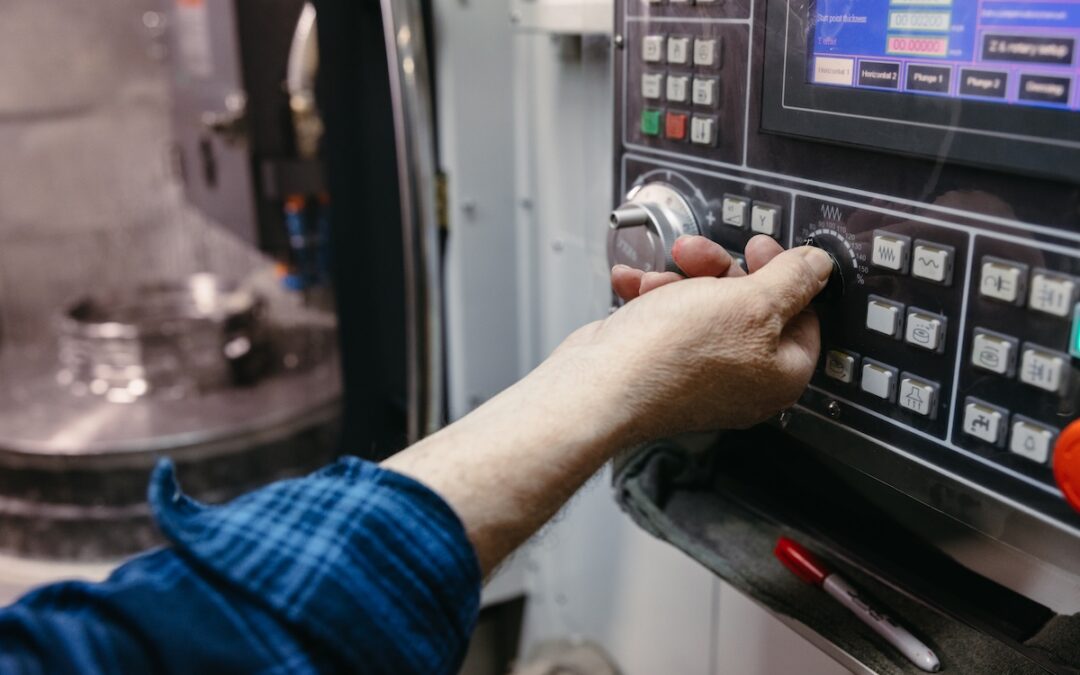
The final grinding stage of an aerospace component represents a high-stakes juncture in a multi-stage manufacturing process. By the time a part reaches the finishing floor, it has already accrued significant production costs through raw material sourcing, forging, heat treatment, and specialized coating applications. At this phase, precision grinding functions as a critical risk-control operation. Scrapping a component during finishing does not merely result in a lost part; it negates the cumulative investment of every preceding production step.
For one long-running aerospace engine seal program, Duval Precision Grinding manages the finishing requirements for a partner whose components serve mission-critical engine applications. This program has been integrated into Duval’s production flow for more than ten years, making it one of the shop’s most consistent long-term aerospace partnerships.
Managing Material Constraints in Coated Aerospace Components
The project involved precision grinding for high-performance engine seals: circular components weighing approximately 15 pounds. These seals are designed to maintain dimensional stability and pressure seals within the turbine environment. To meet the necessary environmental resistance standards, the components feature raised areas around the outside diameter (OD) that are treated with a flame spray coating.
Flame spray is a thermal coating process where molten or semi-molten material is propelled onto a substrate to create a functional surface layer. In aerospace applications, these coatings are typically utilized to improve wear resistance and high-temperature performance. However, the structural characteristics of flame-sprayed materials make them sensitive to downstream finishing. The coatings often possess a mechanical bond to the substrate and a specific micro-porosity that can be compromised by improper grinding parameters.
Engineers recognize that finishing these surfaces requires disciplined control over wheel speeds and feed rates. Recent research on precision grinding optimization reinforces that surface quality and dimensional accuracy depend on the interaction of grinding parameters, abrasive tool condition, workpiece material properties, and thermal-mechanical effects in the grinding zone. Excessive heat or pressure during the grinding pass can induce surface micro-cracking or lead to delamination, which would render the seal nonconforming before it reaches final assembly.
Risk Mitigation in Multi-Stage Aerospace Manufacturing
The primary recurring operation for this program is OD grinding of a coated feature. Because the seals are high-value components with strict tolerances, the grinding process must be highly repeatable. Over a decade of production, the technical team has refined a workflow that balances material removal rates with the need to preserve the integrity of the flame spray coating.
Consistency is essential for this program because the parts are frequently subject to expedited delivery schedules. High global demand for engine components means that the manufacturing chain operates with minimal margin for delay. Duval’s role is to provide operational stability within the customer’s supply chain, ensuring that parts move through the grinding stage and into final inspection without the avoidable delays associated with rework or non-conformance.
Solving Internal Clearance and Path Interference in OD Grinding
While the majority of the program focus is on OD features, certain components require the precision grinding of eight internal raised flats. These areas are ground when the upstream manufacturing process leaves excess material above the required thickness, necessitating a reduction to ensure a proper fit within the engine housing.
Grinding internal features on a circular part of this mass introduces a complex clearance challenge. Although the work is performed on an OD grinder, the geometry of the seal prevents a standard linear approach. A straight trajectory would cause the grinding wheel to interfere with the circular frame of the seal, potentially clipping the part and causing an immediate scrap.
To access the interior correctly, the operator must execute a synchronized multi-axis setup:
- Table Orientation: The machine table is turned to a specific angle to bring the internal elements into the work zone.
- Workhead Alignment: The workhead is angled to ensure the wheel enters the internal diameter at a trajectory that avoids contact with any surrounding features.
This operation depends on the skill of tenured grinders who understand the relationship between wheel diameter, part arc, and machine movement. Because the clearance envelope is narrow, the setup must be verified with extreme care to prevent the wheel from “bowing” into the part or making unintended contact with the OD frame.
Advanced Metrology and Coordinate Measuring Machine (CMM) Verification for Precision-Ground Aerospace Parts
Given that grinding is one of the final stages in a multi-stage manufacturing sequence, quality control is integrated into every phase of the Duval workflow. The process is designed to identify potential issues before additional value is added to a part that may already be compromised.
- Incoming Inspection: Upon arrival, every seal undergoes a visual and non-destructive check for visible coating defects. Because the flame spray application is a high-heat process, parts are checked for pre-existing chips or delamination.
- In-Process Monitoring: During the grinding of both the OD features and the internal areas, operators record dimensional data to ensure the machine setups remain within the specified tolerance band.
- Final Metrology: Following the grinding operations, components move to final inspection, where they are verified using a Coordinate Measuring Machine (CMM). This provides the traceable, high-precision data required to confirm that all dimensions—including the complex angles of the internal areas—meet the customer’s specifications.
A Legacy of Precision Grinding Reliability in High-Demand Aerospace Manufacturing
The longevity of this partnership is based on technical reliability and the ability to meet expedited schedules without sacrificing quality. Before transitioning the work to Duval Precision Grinding, the partner experienced challenges with vendors who could not maintain the necessary turnaround times or the stringent quality standards required for mission-critical aerospace parts.
By mastering the difficult setups required for internal grinding and respecting the material limitations of flame-sprayed coatings, Duval serves as a dependable finishing resource for the program. In an industry where production stability is a primary metric of success, the ability to repeat complex processes correctly—every time—is the most valuable outcome a grinding partner can provide.
Reliable Precision Grinding For Mission-Critical Components
Do you have an aerospace component with complex internal geometries or sensitive coatings? Contact us to discuss your project requirements and learn why engineers trust Duval Precision Grinding—time after time, part after part.